


E-Waste Recycling Plant Setup in India: Cost, Machinery & ROI
With the increasing use of electronic devices such as smartphones, laptops, televisions, and home appliances, electronic waste (e-waste) is growing rapidly across India. Managing this waste responsibly has become a major environmental priority.
E-waste recycling plants play a crucial role in recovering valuable materials from discarded electronics while preventing harmful substances from entering the environment. Because of the rising volume of electronic waste and stricter government regulations, starting an e-waste recycling
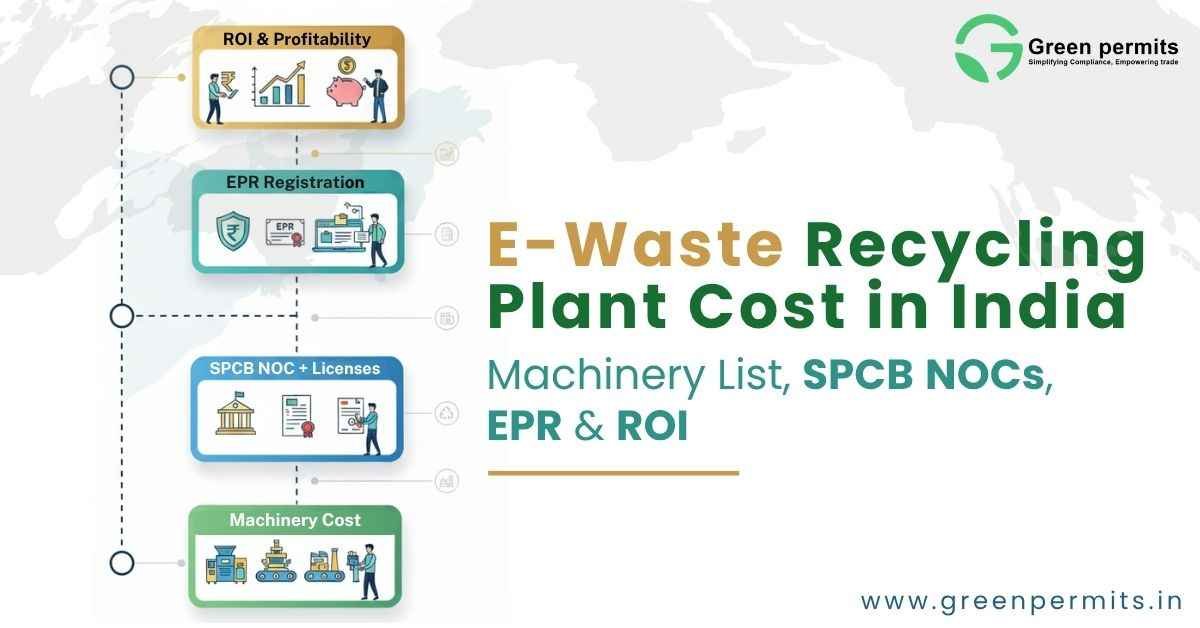
E-Waste Recycling Plant Cost in India: Machinery List, SPCB NOCs, EPR & ROI - Green Permits
Detailed guide on e-waste recycling plant cost in India, machinery list, SPCB approvals, EPR compliance, and ROI insights. Book a consultation today.
https://www.greenpermits.in/e-waste-recycling-plant-cost-in-india-machinery-roi/
PESO License for Petroleum & LPG Storage in India: Why It Is Mandatory
Businesses that deal with petroleum products, LPG storage, fuel stations, or industrial gas storage must comply with strict safety regulations in India. One of the most important approvals required for handling these hazardous substances is the PESO License.
PESO (Petroleum and Explosives Safety Organization) regulates the storage, transportation, and handling of petroleum products, LPG, and other explosive materials to ensure public safety and environmental protection. Without proper licensing, businesses cannot lega
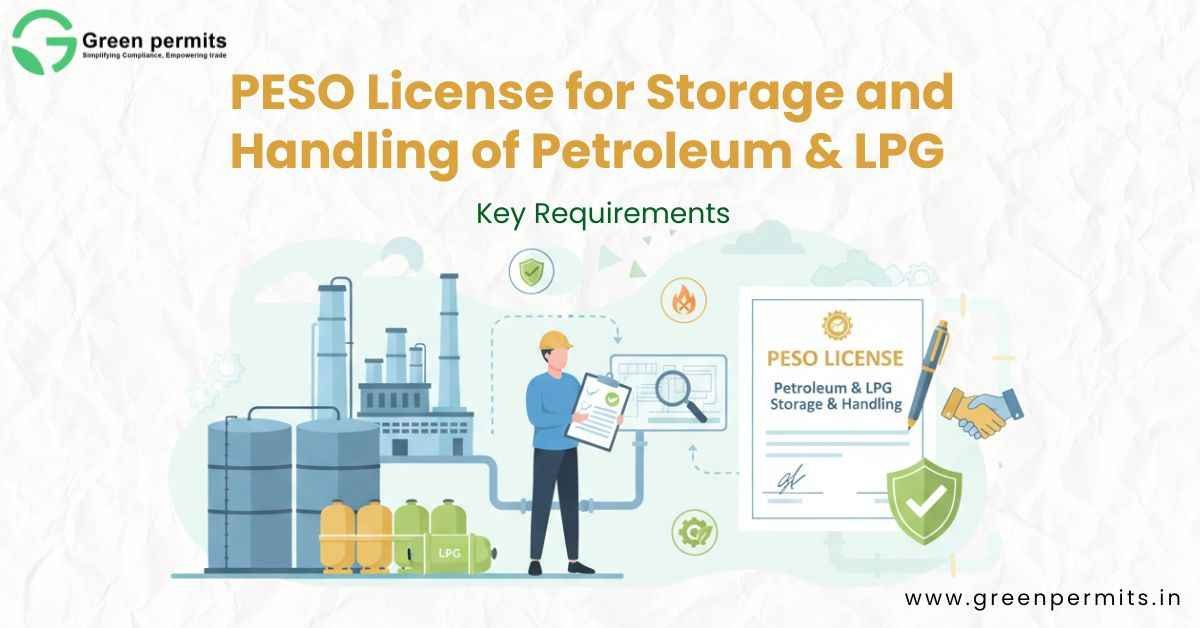
PESO License for Storage and Handling of Petroleum & LPG: Key Requirements - Green Permits
Get a PESO license for safe petroleum & LPG storage. Know classes, documents, fees, and renewal process for compliance under Petroleum & SMPV(U) Rules.
https://www.greenpermits.in/peso-license-for-petroleum-lpg-storage/
Tyre Recycling Plant Setup in India: Cost, Licenses & Business Potential
With the rapid growth of the automobile industry in India, millions of tyres reach the end of their life every year. Disposing of these tyres improperly can lead to serious environmental issues, including soil pollution, fire hazards, and long-term waste accumulation.
This is why tyre recycling plants are becoming an important part of sustainable waste management. Recycling used tyres allows businesses to convert waste rubber into valuable products such as crumb rubber, tyre oil, carbon black, and steel wire. Becaus

How to Set Up a Tyre Recycling Plant in India: Licenses, Cost & Profit Analysis - Green Permits
Start a tyre recycling plant in India with this 2025 guide. Learn licenses, setup cost, profit margins, EPR registration & CPCB rules.
https://www.greenpermits.in/tyre-recycling-plant-setup-in-india-licenses-cost-profit-analysis/
Lithium-Ion Battery Recycling Business in India: A Growing Opportunity
GPMarch 07, 2026
The rapid adoption of electric vehicles, smartphones, laptops, and renewable energy storage systems has significantly increased the use of lithium-ion batteries in India. As these batteries reach the end of their lifecycle, the need for lithium-ion battery recycling is becoming increasingly important.
Recycling lithium-ion batteries not only helps reduce environmental pollution but also allows recovery of valuable materials like lithium, cobalt, nickel, and copper. Because of this, the lithium-ion batt
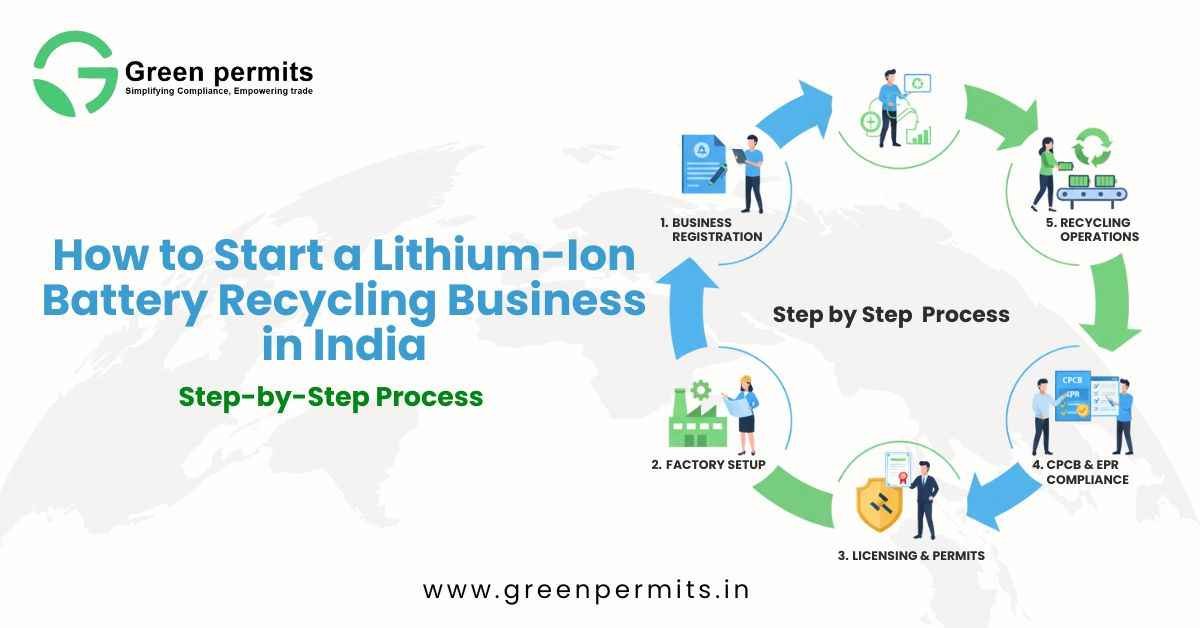
How to Start a Lithium-Ion Battery Recycling Business in India: Step-by-Step Process - Green Permits
Step-by-step guide to start a lithium-ion battery recycling plant in India — covering licenses, EPR compliance, costs, and new government incentives.
https://www.greenpermits.in/lithium-ion-battery-recycling-business-in-india/
Battery Recycling Plant Setup in India: Cost, Licenses & Profit Potential
With the rapid growth of electric vehicles, electronics, and renewable energy storage, battery consumption in India is increasing every year. This growth has also created a strong demand for battery recycling plants that can safely process used batteries and recover valuable materials.
Battery recycling is not only an environmentally responsible business but also a profitable opportunity for entrepreneurs. However, starting a recycling plant requires proper planning, investment, machinery, and most importantly, com

Battery Recycling Plant Setup Cost in India (2025): Licenses, Machinery & ROI - Green Permits
Understand licenses, machinery, government incentives, and real setup costs for a battery recycling plant in India. Plan your 2025 project with Green Permits.
https://www.greenpermits.in/battery-recycling-plant-cost-in-india-licenses-machinery-roi/
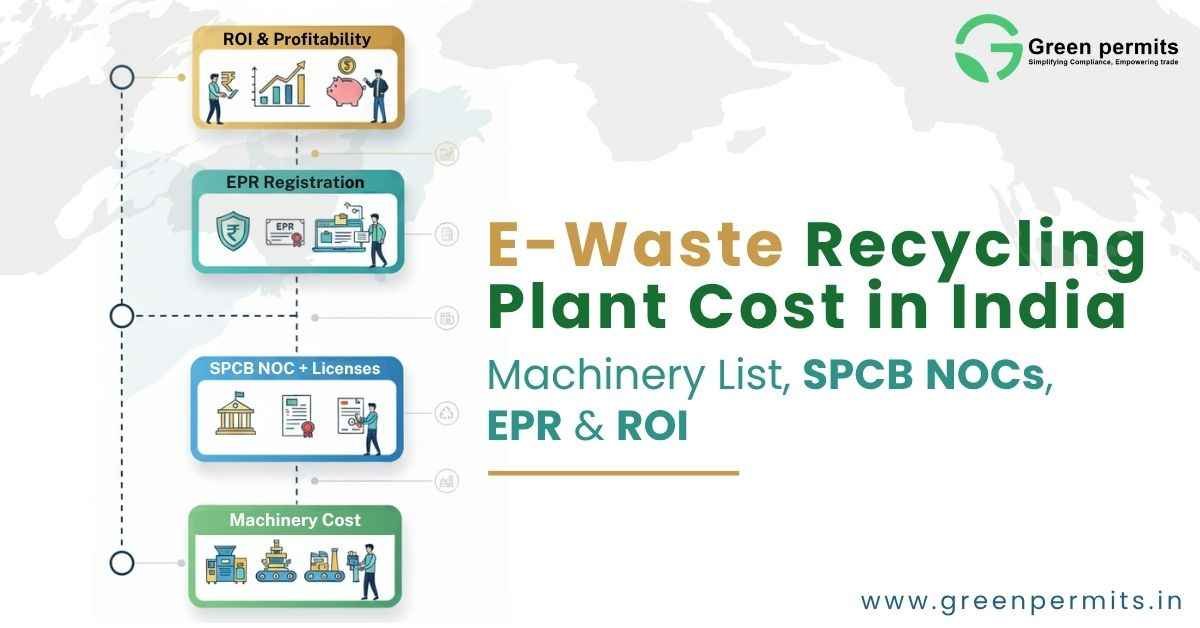
E-Waste Recycling Plant Cost in India: Machinery List, SPCB NOCs, EPR & ROI - Green Permits
Detailed guide on e-waste recycling plant cost in India, machinery list, SPCB approvals, EPR compliance, and ROI insights. Book a consultation today.
https://www.greenpermits.in/e-waste-recycling-plant-cost-in-india-machinery-roi/
Growing Need for E-Waste Recycling in India
GPMarch 06, 2026
India is one of the fastest-growing markets for electronic devices, including smartphones, laptops, televisions, and industrial electronics. With the rapid increase in technology usage, the country is generating a significant amount of electronic waste (e-waste) every year. Improper disposal of this waste can lead to serious environmental and health hazards due to toxic materials such as lead, mercury, and cadmium present in electronic components.
E-waste recycling plays a crucial role in recovering valuable materials such as go
Importance of PESO License for Petroleum and LPG Storage
Petroleum products and Liquefied Petroleum Gas (LPG) are highly flammable substances that require strict safety and regulatory control during storage and handling. In India, any facility involved in the storage, transportation, or distribution of petroleum products or LPG must obtain a PESO license to ensure compliance with safety regulations.
The Petroleum and Explosives Safety Organization (PESO) regulates the safe handling of petroleum, gas, and other explosive substances under the Petroleum Act and related safety rules. Obtaini
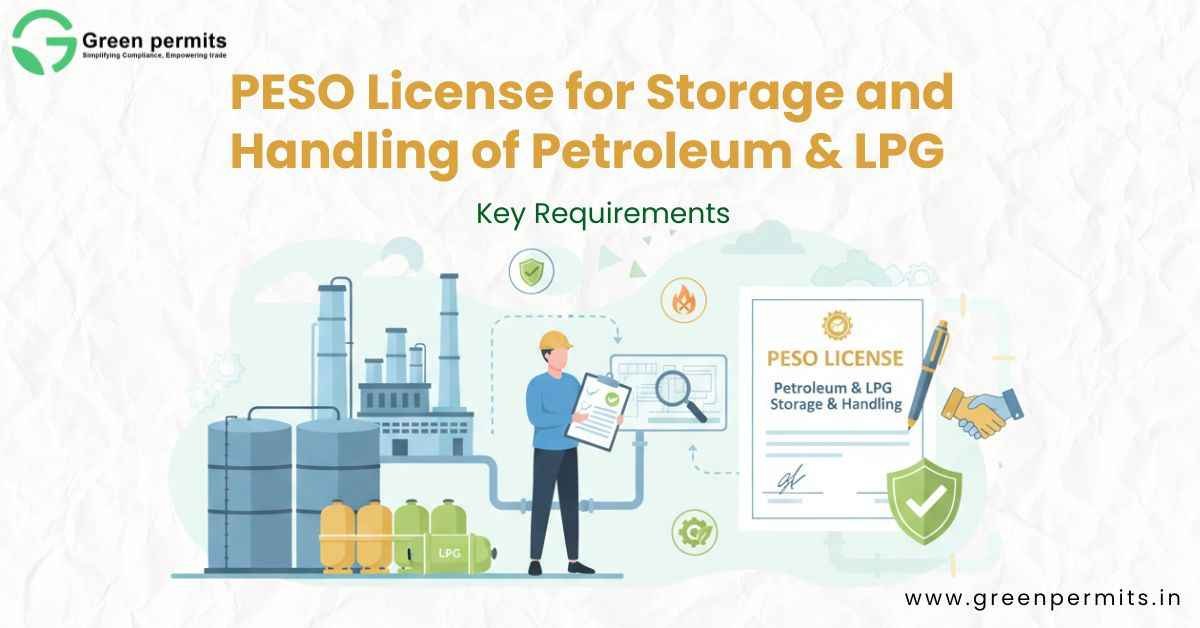
PESO License for Storage and Handling of Petroleum & LPG: Key Requirements - Green Permits
Get a PESO license for safe petroleum & LPG storage. Know classes, documents, fees, and renewal process for compliance under Petroleum & SMPV(U) Rules.
https://www.greenpermits.in/peso-license-for-petroleum-lpg-storage/
Growing Opportunity for Tyre Recycling in India
India generates millions of tonnes of waste tyres every year due to the rapid growth of automobiles, logistics, and transportation industries. Improper disposal of used tyres can lead to severe environmental problems, including air pollution, fire hazards, and land contamination. Because of this, tyre recycling has become a critical part of sustainable waste management in the country.
Tyre recycling converts end-of-life tyres into valuable materials such as crumb rubber, pyrolysis oil, carbon black, and steel wire. These recovered materials
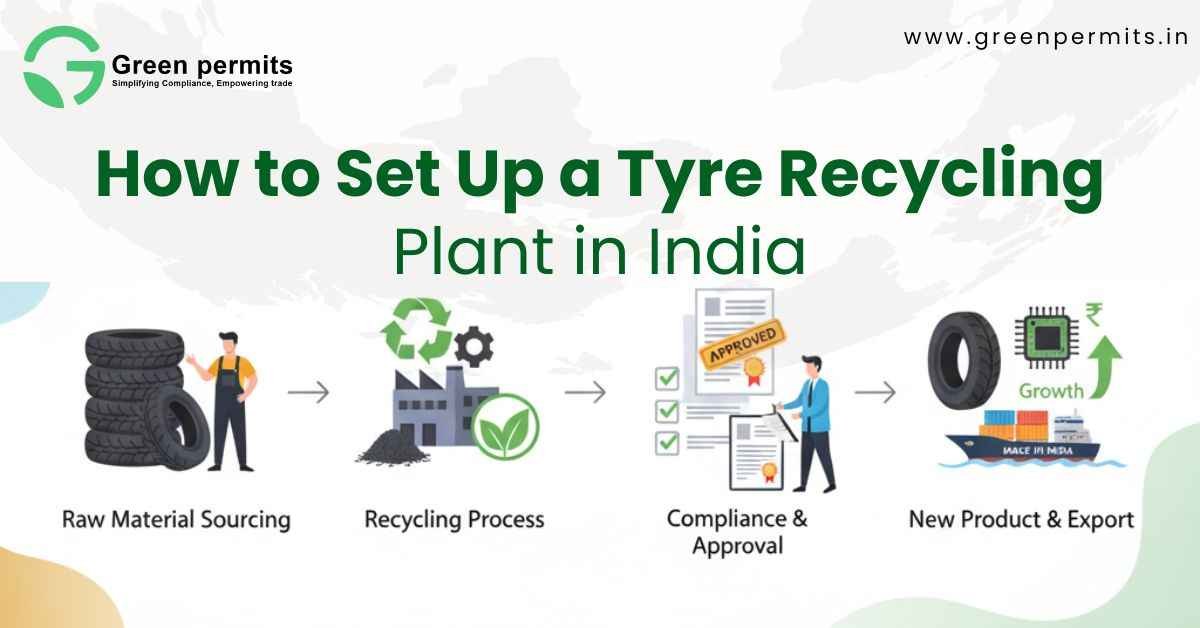
How to Set Up a Tyre Recycling Plant in India: Licenses, Cost & Profit Analysis - Green Permits
Start a tyre recycling plant in India with this 2025 guide. Learn licenses, setup cost, profit margins, EPR registration & CPCB rules.
https://www.greenpermits.in/tyre-recycling-plant-setup-in-india-licenses-cost-profit-analysis/
Growing Opportunity for Tyre Recycling in India
India generates millions of tonnes of waste tyres every year due to the rapid growth of automobiles, logistics, and transportation industries. Improper disposal of used tyres can lead to severe environmental problems, including air pollution, fire hazards, and land contamination. Because of this, tyre recycling has become a critical part of sustainable waste management in the country.
Tyre recycling converts end-of-life tyres into valuable materials such as crumb rubber, pyrolysis oil, carbon black, and steel wire. These recovered materials
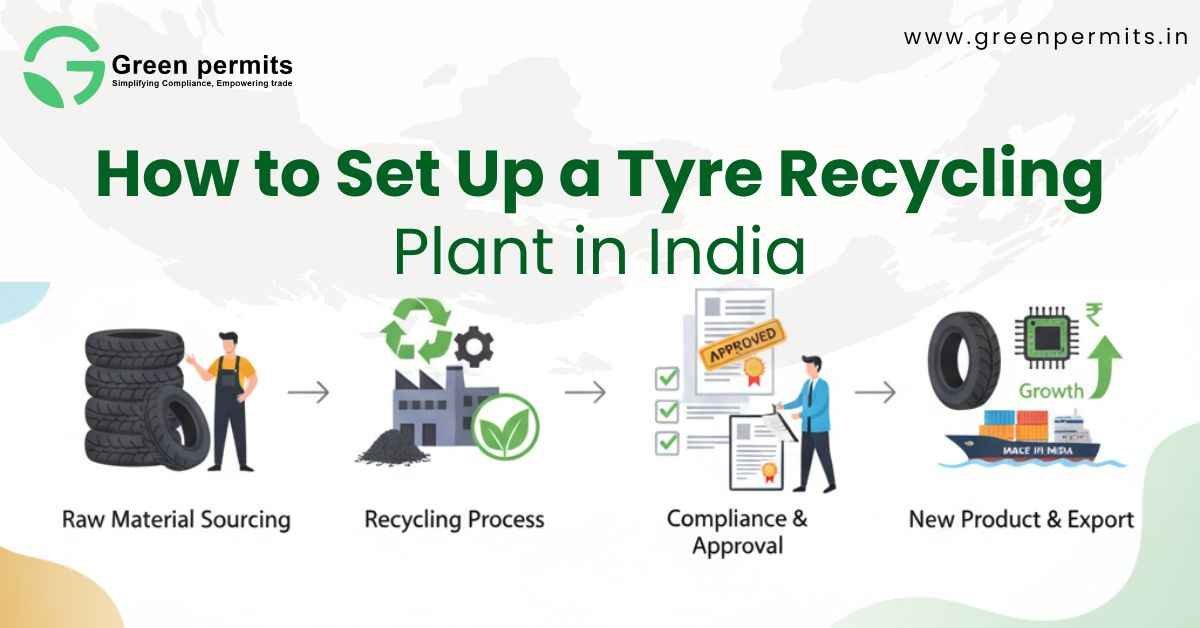
How to Set Up a Tyre Recycling Plant in India: Licenses, Cost & Profit Analysis - Green Permits
Start a tyre recycling plant in India with this 2025 guide. Learn licenses, setup cost, profit margins, EPR registration & CPCB rules.
https://www.greenpermits.in/tyre-recycling-plant-setup-in-india-licenses-cost-profit-analysis/
Rising Demand for Lithium-Ion Battery Recycling in India
The rapid expansion of electric vehicles, energy storage systems, and portable electronics is driving an unprecedented demand for lithium-ion batteries in India. As these batteries reach the end of their life cycle, managing lithium-ion battery waste has become a critical environmental and economic challenge.
Lithium-ion batteries contain valuable materials such as lithium, cobalt, nickel, manganese, and copper. Recycling these materials not only prevents environmental contamination but also reduces the need for mining new resource
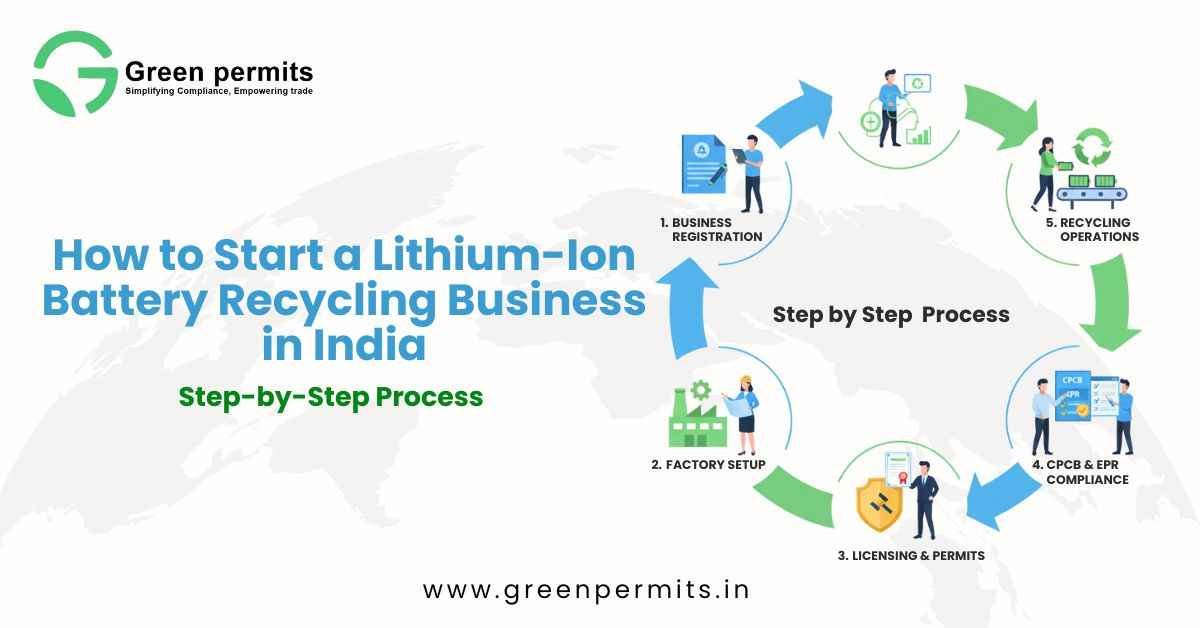
How to Start a Lithium-Ion Battery Recycling Business in India: Step-by-Step Process - Green Permits
Step-by-step guide to start a lithium-ion battery recycling plant in India — covering licenses, EPR compliance, costs, and new government incentives.
https://www.greenpermits.in/lithium-ion-battery-recycling-business-in-india/
Growing Demand for Battery Recycling in India
India is witnessing rapid growth in electric vehicles, renewable energy storage systems, and consumer electronics. This expansion has significantly increased the amount of battery waste generated across the country. Managing this waste responsibly has become critical because batteries contain hazardous substances along with valuable metals.
Battery recycling enables the recovery of important materials such as lithium, cobalt, nickel, copper, and lead, which can be reused in new manufacturing processes. This reduces the dependency on mining ra
ISI Mark Compliance Failures That Trigger Seizures in India
Green permits
The ISI Mark issued by the Bureau of Indian Standards (BIS) is a mandatory certification for several regulated products in India. However, non-compliance with ISI requirements can lead to product seizures, penalties, and serious business disruption. Understanding common compliance failures is essential for manufacturers and importers.
Common ISI Compliance Mistakes
Frequent violations include using the ISI mark without valid certification, selling products beyond approved scope, failure to renew licenses, non-confo
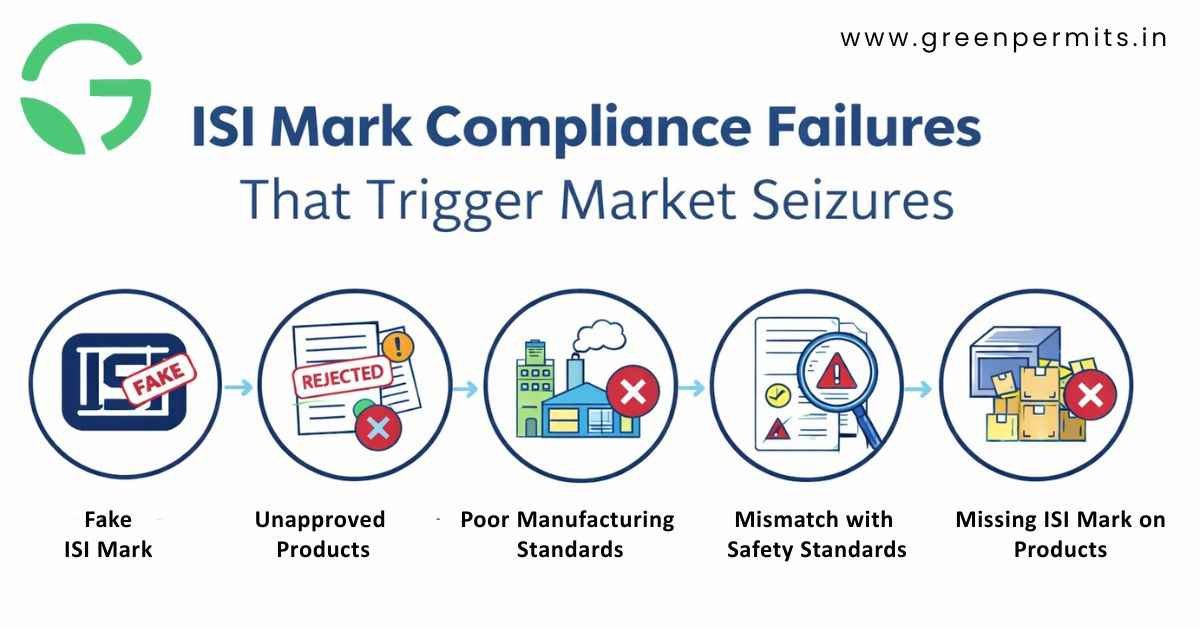
ISI Mark Compliance Failures That Trigger Market Seizures - Green Permits
ISI Mark compliance failures can trigger market seizure and BIS penalties. Avoid suspension and legal risk. Call +91 78350 06182 today.
https://www.greenpermits.in/02/isi-mark-compliance-failures-that-trigger-seizures/
BIS OTR Certification in India: Process, Cost & Eligibility
Green permits
BIS OTR (Off-The-Road) Certification has become mandatory for manufacturers and importers dealing in specific tyre categories in India. Introduced to ensure product quality, safety, and compliance with Indian Standards, BIS OTR certification is essential for businesses operating in the construction, mining, and heavy equipment sectors.
Who Needs BIS OTR Certification
Manufacturers and importers of Off-The-Road (OTR) tyres used in industrial, agricultural, and construction machinery must obtain BIS certification bef

BIS OTR Certification: Who Needs It and Why It Matters - Green Permits
Understand BIS OTR Certification in India, who needs it, process, cost, timeline & penalties. Avoid shipment delays. Call +91 78350 06182.
https://www.greenpermits.in/02/bis-otr-certification-in-india-process-cost-who-needs-it/
Solar Module Imports Without BIS: Legal Risks & Penalties in India
Green permits
India’s renewable energy sector is expanding rapidly, but compliance requirements for solar module imports have also become stricter. Importing solar modules without mandatory BIS certification can expose businesses to serious legal risks, penalties, and shipment delays.
BIS Certification Requirement for Solar Modules
Under Indian regulations, specific solar photovoltaic (PV) modules must comply with Bureau of Indian Standards (BIS) certification before being imported or sold in the domestic market. BIS ensu

Solar Module Imports Without BIS: Legal Risks & Penalties - Green Permits
Solar Module Imports Without BIS can lead to seizure, fines & project delays. Ensure BIS compliance before import. Call Green Permits today.
https://www.greenpermits.in/02/solar-module-imports-without-bis-legal-risks-penalties-in-india/
Plastic Recycling Plant Subsidy in India: Complete Guide 2026
Green permits
With India strengthening its circular economy goals, plastic recycling businesses are receiving increasing policy and financial support. In 2026, entrepreneurs and MSMEs setting up plastic recycling plants can explore various government subsidies, incentives, and funding schemes designed to reduce capital burden and encourage sustainable waste management.
Available Subsidies & Government Schemes
Plastic recycling units may be eligible for MSME subsidies, state industrial policy incentives, capital investment subs
Plastic Recycling Plant Subsidy in India - Green Permits
Plastic recycling plant subsidy in India explained with MSME benefits, state incentives & compliance steps. Call Green Permits today.
https://www.greenpermits.in/02/plastic-recycling-plant-subsidy-in-india-complete-guide-2026/
BIS Hallmark Certification: Compliance Rules for Jewellery Businesses
Green permits
BIS Hallmark Certification is mandatory for jewellery businesses in India dealing with gold and silver ornaments. Introduced to ensure purity, transparency, and consumer protection, hallmarking has become a critical compliance requirement for manufacturers, wholesalers, and retailers in the jewellery sector.
Who Needs BIS Hallmark Certification
Jewellers selling gold and silver jewellery must obtain BIS registration and ensure that products are hallmarked through authorized BIS Assaying & Hallmarking Cent
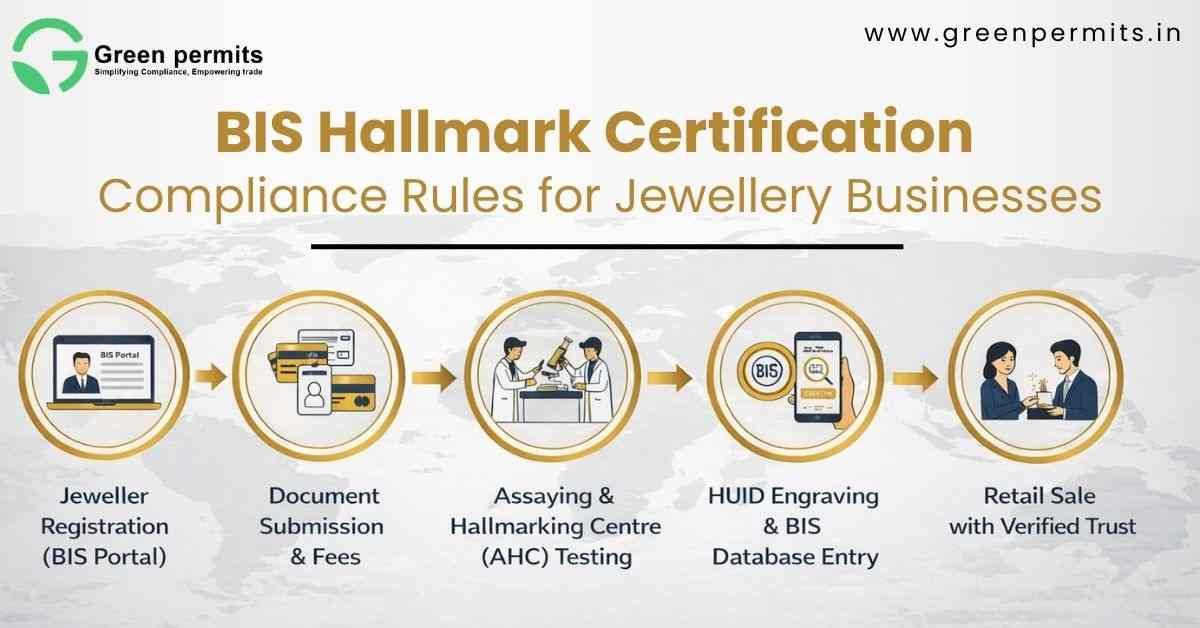
BIS Hallmark Certification: Compliance Rules for Jewellery Businesses - Green Permits
Understand BIS Hallmark Certification rules, HUID compliance, registration steps & penalties for jewellers. Ensure your jewellery business stays compliant.
https://www.greenpermits.in/02/bis-hallmark-certification-compliance-rules-for-jewellery-businesses/
Common SPCB Objections in Plastic Recycling Plant Approvals
Green permits
Setting up a plastic recycling plant in India requires approvals from the State Pollution Control Board (SPCB). However, many applications face delays due to common objections related to documentation, plant layout, pollution control systems, or compliance gaps. Understanding these objections in advance can help businesses avoid costly setbacks.
Why SPCB Raises Objections
SPCBs carefully review applications to ensure compliance with environmental norms and the Plastic Waste Management Rules. Objections typically ar
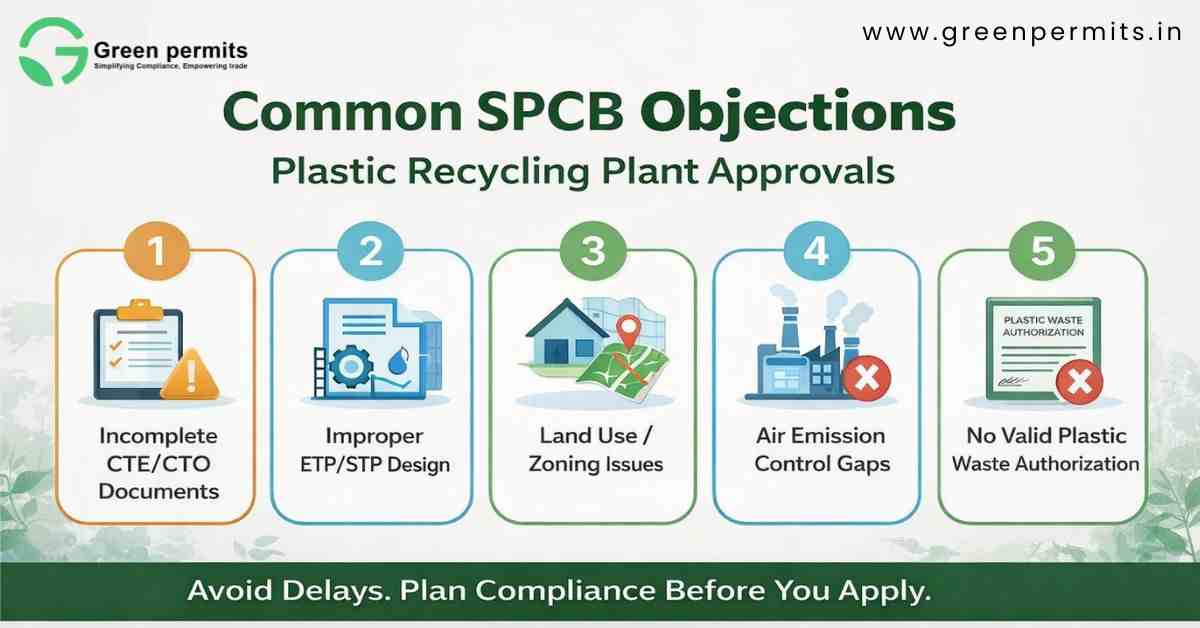
Common SPCB Objections in Plastic Recycling Plant Approvals - Green Permits
A plastic recycling entrepreneur recently told us, “I thought buying machinery was the difficult part. I didn’t know documentation would stop my project.” The land was finalized. The granulator and washing line were ordered. Workers were hired. But the SPCB raised multiple objections — layout mismat..
https://www.greenpermits.in/common-spcb-objections-in-plastic-recycling-plant-approvals/
Plastic Waste Recycling Plant Setup Under PWM Rules in India
Green permits
With stricter enforcement of the Plastic Waste Management (PWM) Rules, setting up a plastic waste recycling plant in India requires proper planning, approvals, and compliance. The PWM framework ensures responsible collection, processing, and recycling of plastic waste, making authorized recycling units a key part of India’s circular economy.
Understanding PWM Rules & Compliance Requirements
Under the PWM Rules, recyclers must obtain authorization from the Pollution Control Board and register as a Plastic Waste Pro
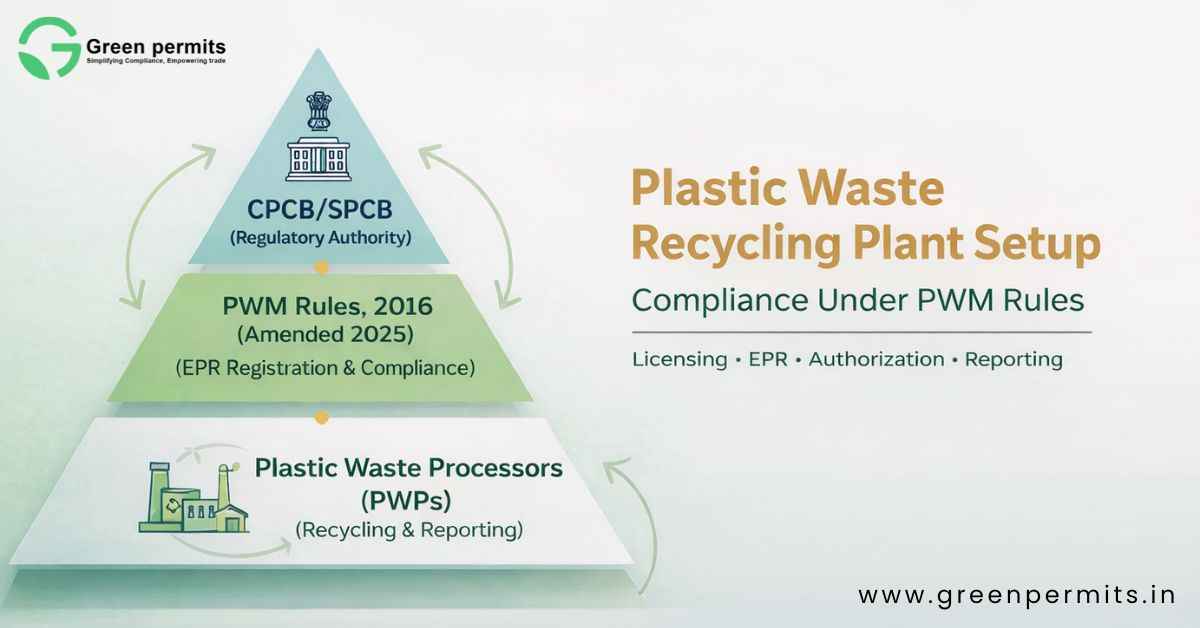
Plastic Waste Recycling Plant Setup: Compliance Under PWM Rules - Green Permits
Plastic Waste Recycling Plant Setup guide under PWM Rules. Learn CPCB registration, SPCB approvals, EPR compliance & cost details. Consult Green Permits.
https://www.greenpermits.in/plastic-waste-recycling-plant-setup-under-pwm-rules/
Freight Forwarding Case Study in India: A CHA Success Story
Cargo People
Freight forwarding in India involves navigating complex customs regulations, tight timelines, and multi-modal coordination. This case study highlights how a well-executed CHA and freight forwarding strategy can transform operational challenges into a smooth, compliant, and successful shipment experience.
The Challenge: Complex Customs & Time-Sensitive Cargo
The client faced issues related to documentation gaps, customs clearance delays, and coordination challenges across ports. Any further delay could have resulted

Successful End-to-End Freight Forwarding for Indian Exporters - Cargopeople Blog
Freight forwarding case study India showing how end-to-end logistics and CHA coordination reduced delays and export risk. Talk to Cargo People today.
https://www.cargopeople.com/blog/freight-forwarding-case-study-india-cha-success-story/
Export Trade Regulations in India: FTAs & Compliance Essentials
Cargo People
India’s export landscape is governed by evolving trade regulations, Free Trade Agreements (FTAs), and strict compliance requirements. For exporters, understanding and adhering to these regulations is essential to avoid delays, penalties, and loss of trade benefits while remaining competitive in global markets.
Role of FTAs in Indian Exports
Free Trade Agreements allow Indian exporters to access international markets at reduced or zero customs duty, improving price competitiveness. However, availing FTA benefits

Trade Agreements & Cross-Border Regulations Every Exporter Should Know - Cargopeople Blog
Understand export trade regulations India exporters must follow. Learn about FTAs, customs documentation, and compliance to avoid delays. Consult experts.
https://www.cargopeople.com/blog/export-trade-regulations-india-ftas-compliance-guide/
Authorized Vehicle Scrapping Facility in India: Setup & Compliance Guide
Green Permits
With the rollout of India’s Vehicle Scrappage Policy, setting up an Authorized Vehicle Scrapping Facility (AVSF) has become a high-potential business opportunity. These facilities play a key role in safe vehicle dismantling, material recovery, and reducing environmental impact while supporting the circular economy.
Infrastructure & Setup Requirements
An AVSF requires adequate land, dismantling zones, depollution systems, storage areas, safety equipment, and trained manpower. Proper facility layout and

How to Set Up an Authorized Vehicle Scrapping Facility in India - Green Permits
Step-by-step guide to setting up an Authorized Vehicle Scrapping Facility in India. Learn approvals, costs, risks, and compliance requirements.
https://www.greenpermits.in/how-to-set-up-an-authorized-vehicle-scrapping-facility-in-india/
PESO Certificate in India: Requirement, Process & Compliance
Green Permits
The PESO Certificate is a mandatory approval for businesses dealing with petroleum products, compressed gases, explosives, pressure vessels, and other hazardous substances in India. Issued by the Petroleum and Explosives Safety Organization (PESO), this certification ensures that storage, handling, and operations meet strict safety standards.
Who Requires a PESO Certificate
Industries such as oil & gas, chemicals, LPG storage, battery manufacturing, fireworks, and hazardous material handling units require PESO app

PESO Certificate - Green Permits
Learn about PESO Certificate in India: process, fees (2025), documents, penalties, renewal timelines, and why businesses need PESO approval.
https://www.greenpermits.in/peso-certificate/
Lithium Battery Plant Setup in India: Requirements, Cost & Market Potential
Green Permits
With the rapid growth of electric vehicles, renewable energy storage, and clean mobility initiatives, lithium batteries have become a critical component of India’s energy transition. As a result, setting up a lithium battery manufacturing or processing plant in India presents a high-growth industrial opportunity backed by strong policy support.
Key Setup Requirements & Infrastructure
Lithium battery plant setup requires careful planning of land, plant layout, advanced machinery, safety systems, and

Lithium Battery Plant Setup Requirements in India: Land, Capital, Technology & Compliance - Green Permits
Land, capital, technology & compliance checklist for lithium battery plant setup in India. Learn approvals, BIS, and EPR rules. Consult Green Permits today.
https://www.greenpermits.in/lithium-battery-plant-setup-requirements-in-india/
Funding & Incentives for Recycling Businesses in India
India’s shift toward a circular economy has made recycling one of the most supported green business sectors today. From plastic and e-waste to battery and metal recycling, the government actively encourages entrepreneurs and MSMEs through funding support, subsidies, and policy incentives. For recycling businesses, this support reduces capital risk and improves long-term profitability.
Government Funding, Subsidies & EPR-Driven Demand
Recycling businesses in India can access multiple funding options, including MSME loans, bank financ

Funding & Incentives Available for Recycling Businesses in India - Green Permits – EPR, BIS Certification & Recycling Plant Setup Experts
Explore government funding, subsidies, and incentives for recycling businesses in India. Get compliance-led guidance from Green Permits. Book a consultation.
https://www.greenpermits.in/funding-incentives-for-recycling-businesses-in-india/
Sea Freight Rarely Fails. Customs Clearance Often Does.
Indian importers and exporters spend weeks negotiating freight rates and transit schedules. But when shipments get stuck at ports like Nhava Sheva or Mundra, the reason is rarely the vessel or the carrier.
It’s almost always customs clearance.
A small mismatch in the invoice, a wrong HS code, or delayed filing can keep cargo inside the port yard for days. While the container waits, demurrage and detention start adding up quietly. Buyers follow up. Internal teams scramble.
Sea freight is predictable.
Customs clearance only

Customs Clearance Process in India: Step-by-Step Guide for Importers - Cargopeople Blog
Learn India’s customs clearance steps and avoid delays with Cargo People’s licensed CHA experts. Book your consultation today!
https://www.cargopeople.com/blog/customs-clearance-in-india-step-by-step-import/
Project Cargo in India: Why Size Isn’t the Real Challenge
A 90+ ton machine reaches an Indian port on time.
The vessel is ready. The cranes are available.
And yet, the cargo sits there for days.
Not because it’s heavy — but because one approval was missed.
That’s project cargo in India.
What Project Cargo Really Means on the Ground
Project cargo isn’t just oversized freight.
It’s equipment tied to shutdown schedules, commissioning dates, and investment commitments.
When a transformer, turbine, or reactor is delayed, the cost isn’t limited to freight.
It impacts

Project Cargo: How Freight Forwarders Handle Special Shipments - Cargopeople Blog
When a power equipment manufacturer in Gujarat imported a 96-ton turbine from Germany, everything looked planned on paper. The vessel arrived on time at Mundra Port. But the cargo didn’t move for six extra days.The reason? A missing route approval for an overhead power line clearance on the highway...
https://www.cargopeople.com/blog/project-cargo-how-freight-forwarders-handle-special-shipments/
What Is Extended Producer Responsibility (EPR) in India — And Why Businesses Can’t Ignore It Anymore
GreenDecember 16, 2025
Most Indian businesses don’t learn about EPR from a policy update.
They learn about it from a notice, a delayed shipment, or a sudden question from an investor.
Sales are going well. Products are in the market.
Then someone asks, “Do you have EPR registration?”
That’s usually where the confusion starts.
Extended Producer Responsibility (EPR) isn’t a sustainability buzzword. In India, it’s a legal obligation. If you manufacture, import, or sell products

What Is Extended Producer Responsibility (EPR) in India? A Practical Business Guide - Green Permits – EPR, BIS Certification & Recycling Plant Setup Experts
Learn what Extended Producer Responsibility (EPR) means in India, who must comply, costs, risks & how to stay compliant. Call Green Permits today.
https://www.greenpermits.in/extended-producer-responsibility-epr-in-india/
What Is Extended Producer Responsibility (EPR) in India — And Why Businesses Can’t Ignore It Anymore
Most Indian businesses don’t learn about EPR from a policy update.
They learn about it from a notice, a delayed shipment, or a sudden question from an investor.
Sales are going well. Products are in the market.
Then someone asks, “Do you have EPR registration?”
That’s usually where the confusion starts.
Extended Producer Responsibility (EPR) isn’t a sustainability buzzword. In India, it’s a legal obligation. If you manufacture, import, or sell products that generate plastic

What Is Extended Producer Responsibility (EPR) in India? A...
What Is Extended Producer Responsibility (EPR) in India — And Why Businesses Can’t Ignore It Anymore Most Indian businesses don’t learn about EPR from a policy update. They learn about it from a notice, a delayed shipment, or a sudden question from an investor. Sales are...
https://animesocial.su/posts/124248
Ethanol Plant Setup in India: A Green Business Opportunity
India is witnessing a major shift in its energy landscape. With the government actively promoting biofuels to reduce dependence on fossil fuels and cut carbon emissions, ethanol production has emerged as one of the most promising opportunities. For entrepreneurs, investors, and businesses, setting up an ethanol plant in India
At Green Permits, we specialize in simplifying the ethanol plant setup process for businesses. Whether it’s compliance, project planning, or obtaining clearances.
📞 +91 78350 06182 | 📧 wecare@greenpermits.
Who to follow